August- October 2023 | Advanced Design Studio Project
Through Art, Voices Speak:
Reflecting on Normal in a Single Space
An immersive experience that confronts visitors with diverse notions of 'normal', sparking reflection on individuality and society.
I heard someone say "I just want to feel normal".
Why do we chase a standard of normal that feels so subjective—shifting drastically from one person to another? Who gets to decide what’s normal, and why do we feel the need to conform to it? What even is normal?
So, I took a moment to reflect on what we’re actually seeking when we invoke the idea of normal.
Opportunity
- To translate an abstract concept into a physical experience.
- Design for interaction and reflection, ensuring accessibility and inclusivity.
- Measure impact and engagement.
Initial Direction
I began with the idea of designing everyday objects that look normal but are built using unexpected materials, introducing a sense of reconstructed familiarity within a personal space.
I knew who my participants were going to be so I decided to find out what they thought was normal so I could figure out what these objects should be.
User Research
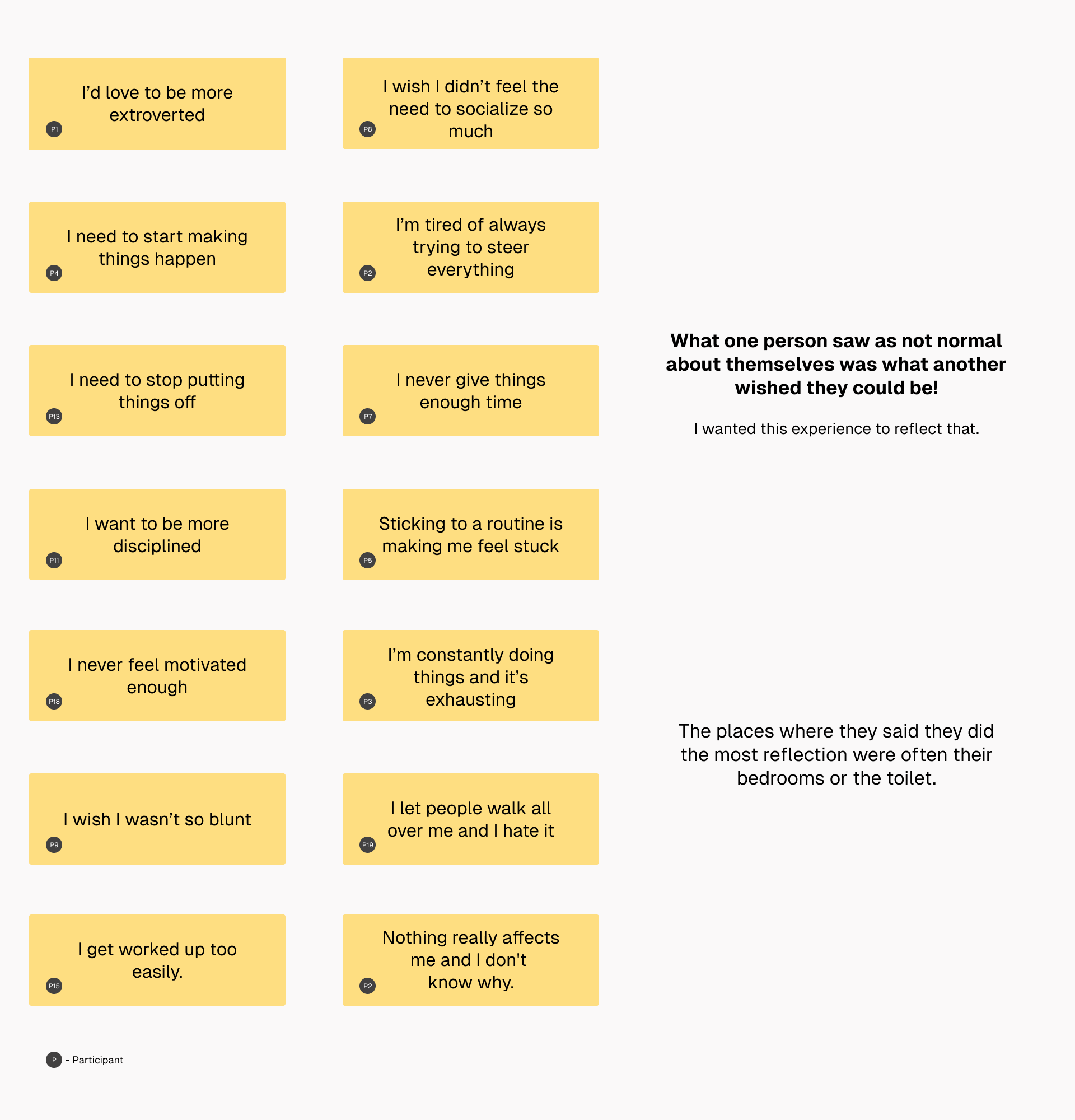
I surveyed 30 peers and instructors from my advanced design studio cohort, asking what felt normal to them—and what didn’t. Their candid, thoughtful responses shaped the project’s direction and became the lens through which I developed the rest of the work.
Here’s what their responses looked like with contradicting quotes placed next to each other.
Constraints
- Space- A compact, enclosed area similar in size to a standard restroom stall or phone booth (feet (W) × 3 feet (D) × 6–7 feet (H)). Ideal for one person to step inside and interact privately.
- Budget- 30 USD.
- Time- 1 minute per participant because it would be up for only 30 minutes prior to critique.
My Approach
Space
Although I loved the idea of placing this experience in a makeshift restroom, there were logistical roadblocks so I focussed on the bedroom.
I was inspired by the
“Black Power Naps/Siestas Negras” project and wanted this experience to feel as personal as this installation. I just had one problem- getting a bed into this space came with its own logistical issues.
So, I looked at ways to make a bed using materials that would be easy to source and install.
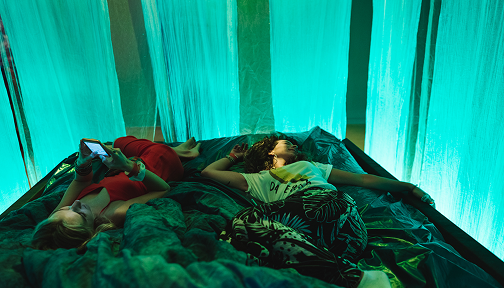
Project- Black Power Naps
This cardboard bed caught my attention and while I was trying to sketch what the space would look like with a makeshift bed.
I quickly realized that-
- Sitting on a sheet of cardboard placed on the floor would be uncomfortable.
What if they didn’t have to sit? - Does this make the space feel personal?
No, it does not. - What would they look at while they’re sitting here?
What if this was a bedroom without a bed?
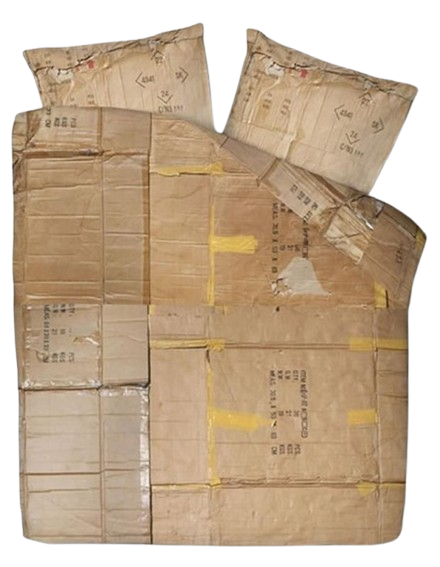
A cardboard bed
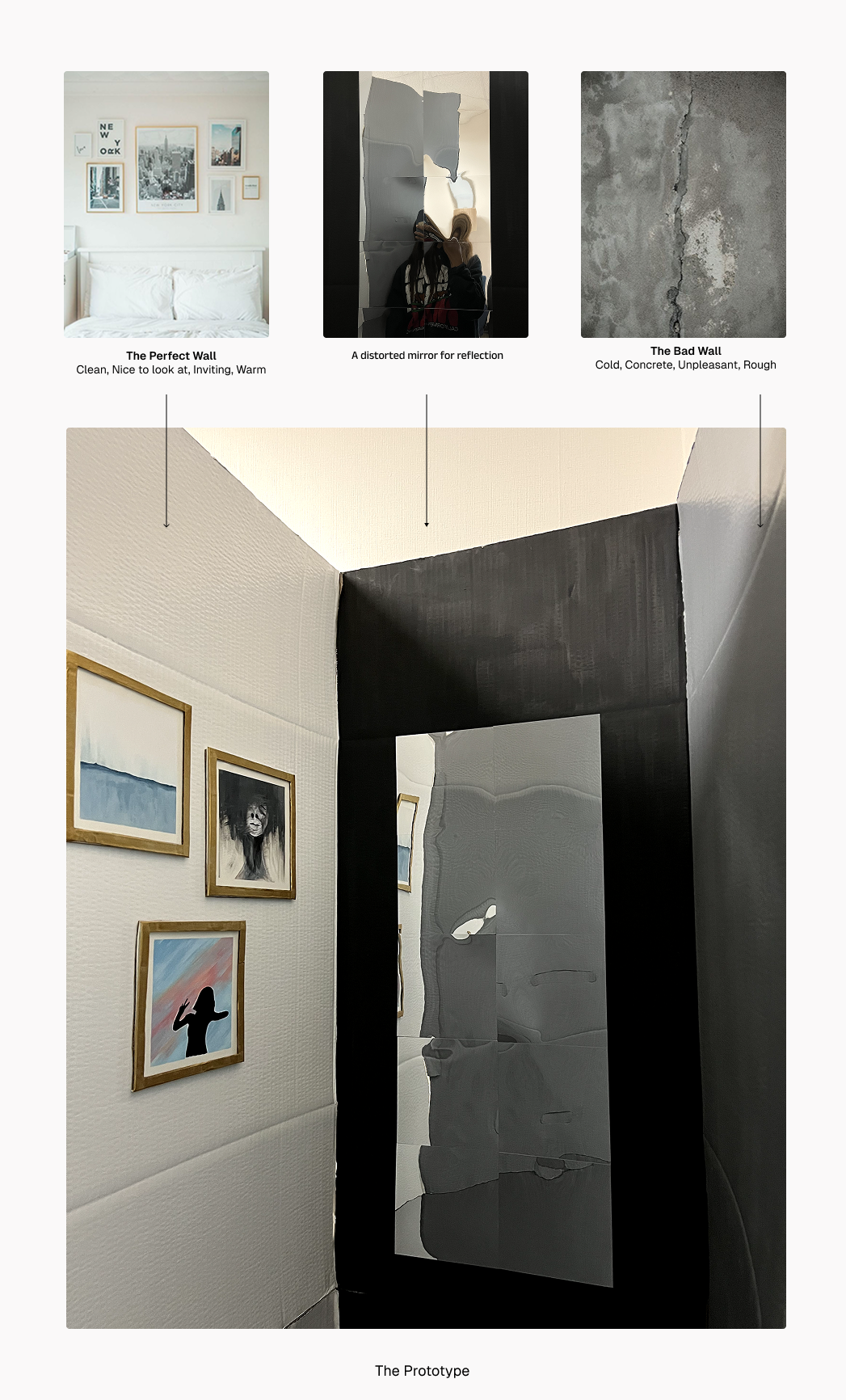
I went back to my participants to understand what they would describe as the most ideal bedroom wall and what the walls of a room they would never want to be in would look like and here's what their responses looked like:
Audio
To anchor the experience, I recorded different people reading quotes submitted through the survey. I intentionally layered contradicting perspectives and edited the clips into a single audio piece under 60 seconds, which matched the duration of the experience for each participant.
The recording begins with one voice stating, “I just want to feel normal,” followed by another asking, “What does that even mean?” This exchange sets the tone and distills the experience down to its core question: what is normal?
This was the primary element of the experience.
Lighting
I wanted the focus to remain on the participant, so I initially tried using spotlights. However, given the small size of the prototype, the lighting felt harsh and uncomfortable.
I later switched to dark blue fairy lights, which made the space feel more personal while still creating a sense of seriousness. This was especially important for my participants, who were mostly college students.
Feedback
- 60 seconds was not enough time to process what was going on.
- The audio had the impact I had hoped for it to have.
- The voices they recognized in the audio were distracting.
- There was contradicting feedback on the mirror. Not everyone wanted to look distorted.
Revised Proposal
The bedroom felt personal but it wasn't quite right. Bedrooms look different for everyone. The space itself carries too much of the individual. The research pointed somewhere else. Participants said the places they reflected most were their bedrooms or the toilet. A toilet is different. Whatever it looks like, the experience of being in one is the same. Alone, no distractions, no audience. That felt like the right place to ask the question.
- The audio plays on a loop with no time limit.
- The distorted mirror faces the participant directly.
- The experience runs as long as someone is willing to sit with it.
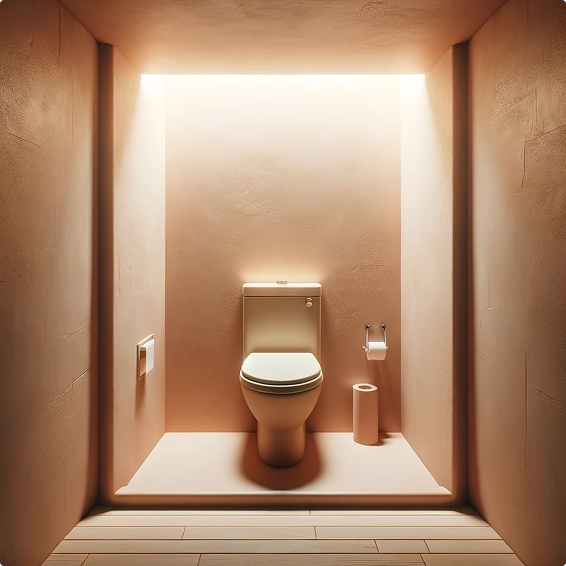
AI-generated image of a toilet reimagined as an installation piece
Credits
- Professor Jason Aston for trusting that I was going somewhere with this.
- Gabby for driving me to Home Depot.
- Rayna for helping me set this up at 6 am on a Monday morning.
Rushenka Christopher © 2025