August 2023- May 2024 | Contract

The Town of University Park

Homeowner Sustainability Scorecard

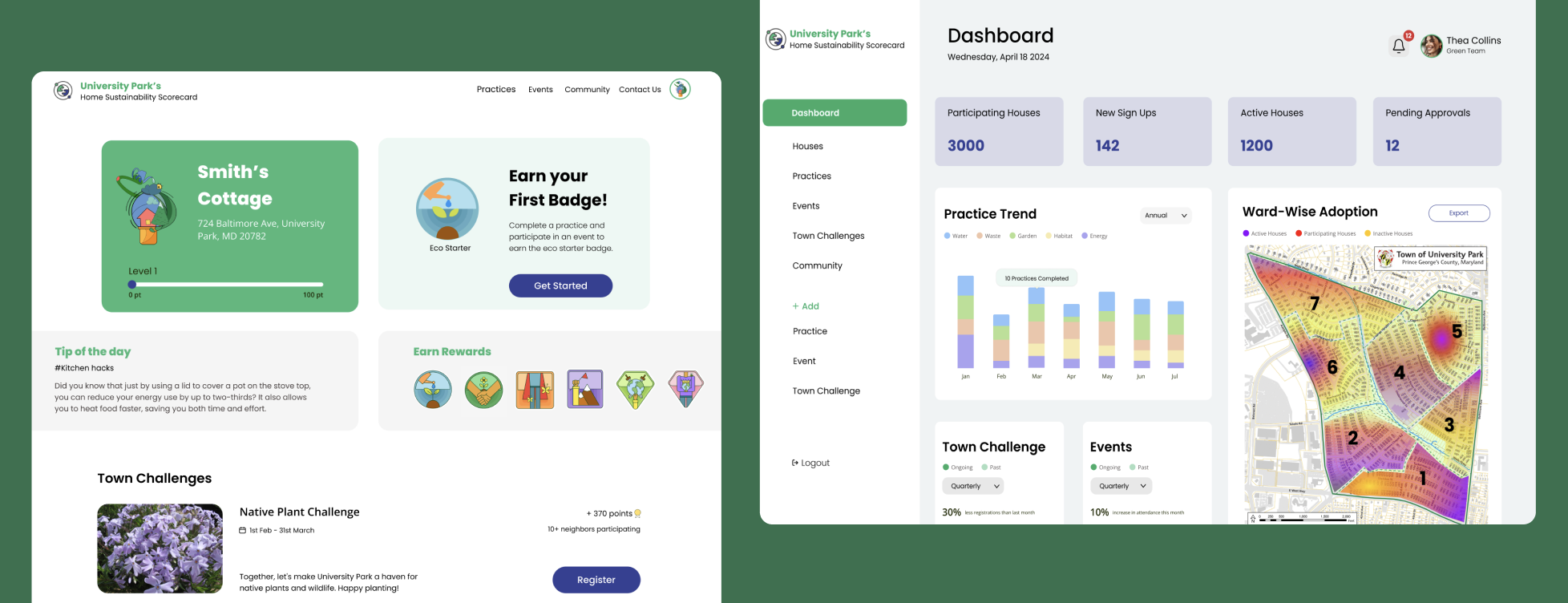
A one-of-a-kind web platform designed for University Park homeowners to engage, track, and enhance their sustainability efforts and build a community, while enabling admins to visualize the impact effectively.

Role
1/5 Product Designers
  • Led UI Design, Information Architecture, and Developer Documentation
  • Participated in every stage of the design process

Starting From Scratch

When the sustainability committee of University Park approached us with an idea to build a landowner rating system, they were heavily inspired by the LEED certification program and assumed a similar rating system would work for homeowners. The initial idea was to encourage landowners to make their homes more sustainable and be scored in comparison to their neighbors.


As we tried to understand the problem they aimed to solve, it became clear that University Park needed more than just a rating system.

So, we designed a system that would

Provide access to sustainability practices and necessary resources for homeowners.
Encourage voluntary commitment to long-term sustainability actions.
Foster a community spirit of mutual learning.
Enable the sustainability committee to monitor town-wide progress effectively.

Our Process Began With

Literature Review and Market Analysis

How is the rest of the world approaching sustainability?
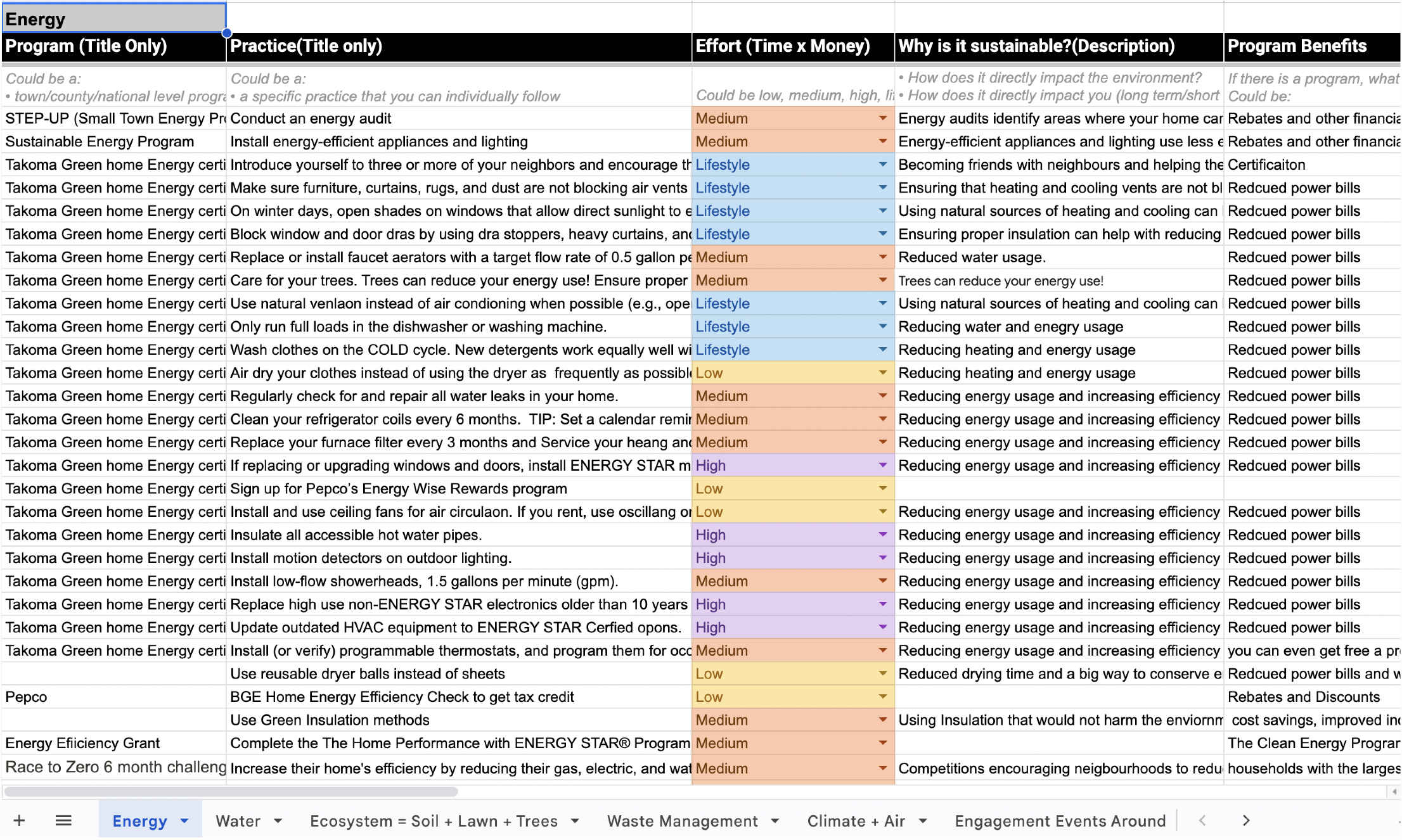
Built a dataset of closely related solutions and a comprehensive list of practices from all over the world, categorizing them by effort and location.
What makes sense for UPark?
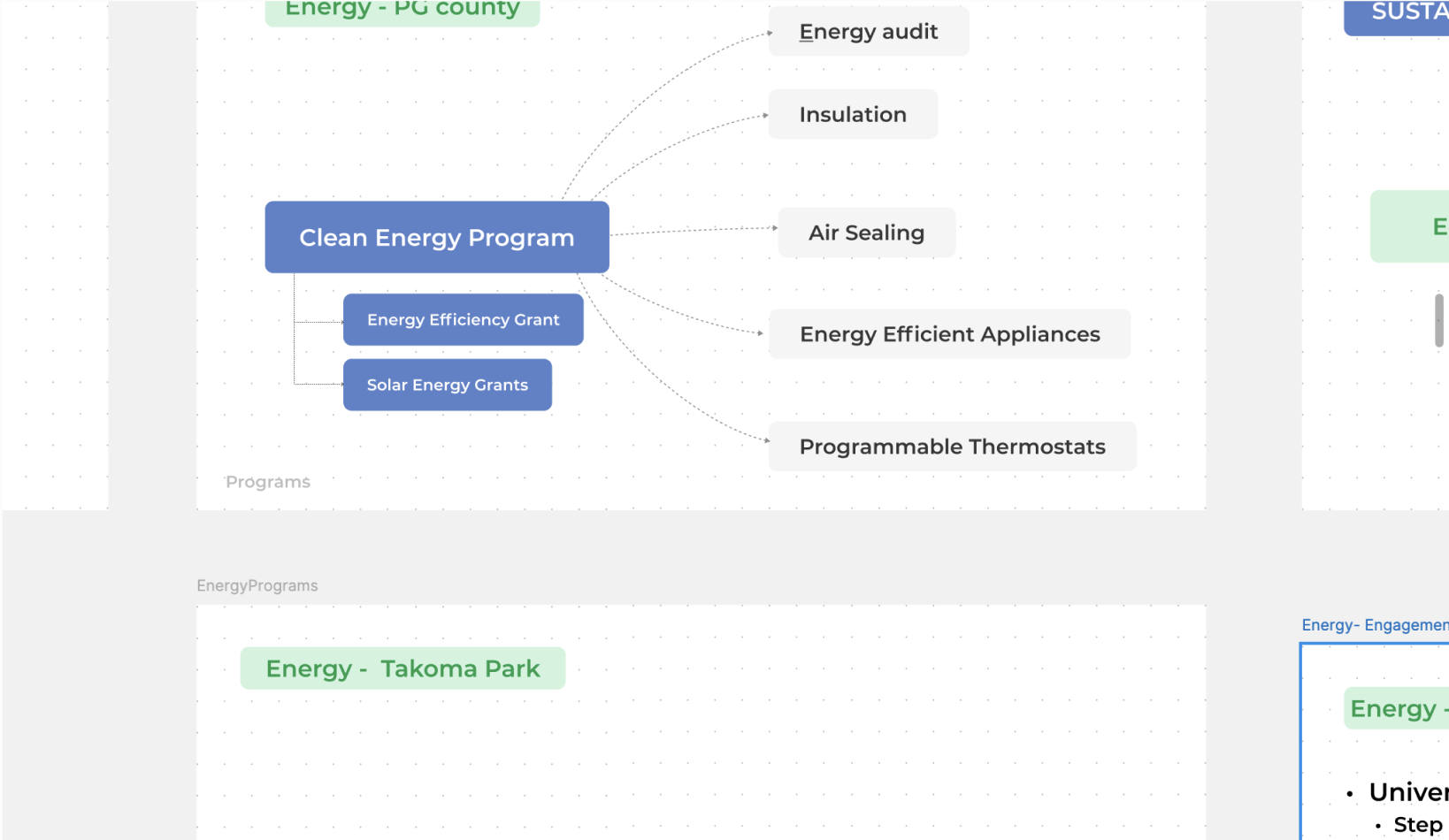
Visualized practices based on the grants and rebates that were available to UPark homeowners but we had to talk to experts to understand if this approach would work.
We then conducted
Expert Interviews and Field Research

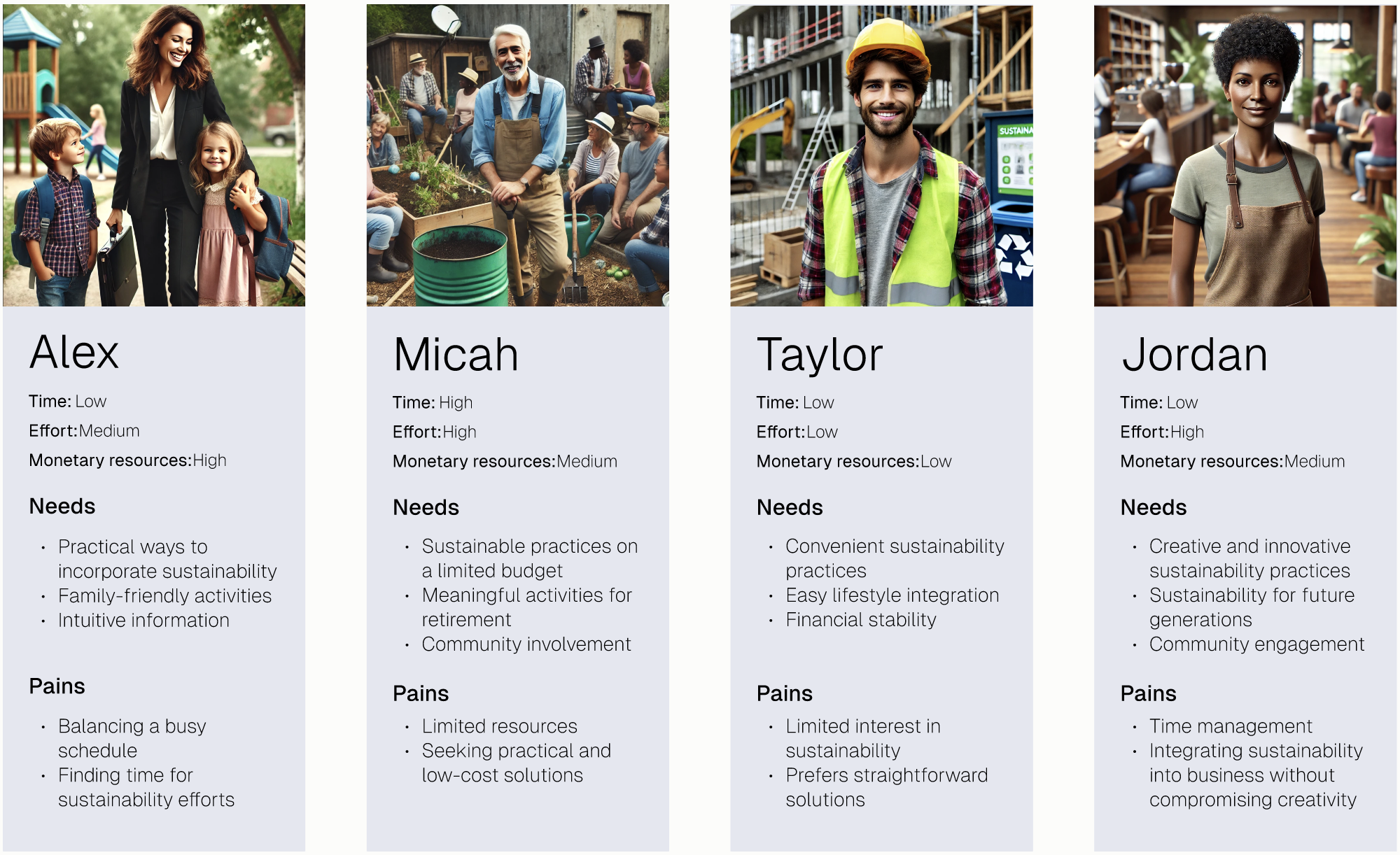
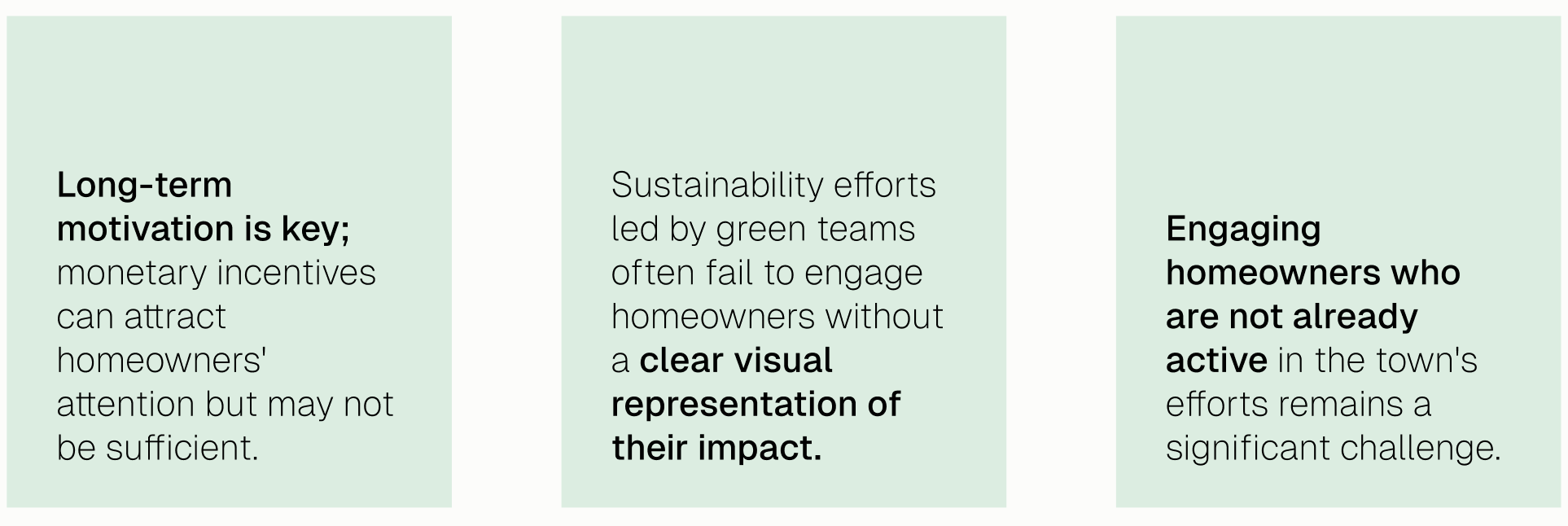
We visited city halls in neighboring towns and cities and spoke with sustainability leads to understand their approaches—what worked well and what didn't. We also interviewed homeowners with varying levels of sustainability awareness to hear their thoughts on effective strategies and areas needing improvement.

Here's what we found out:
Which led us to
Uncovering User Perspectives
In parallel, we set out to establish the
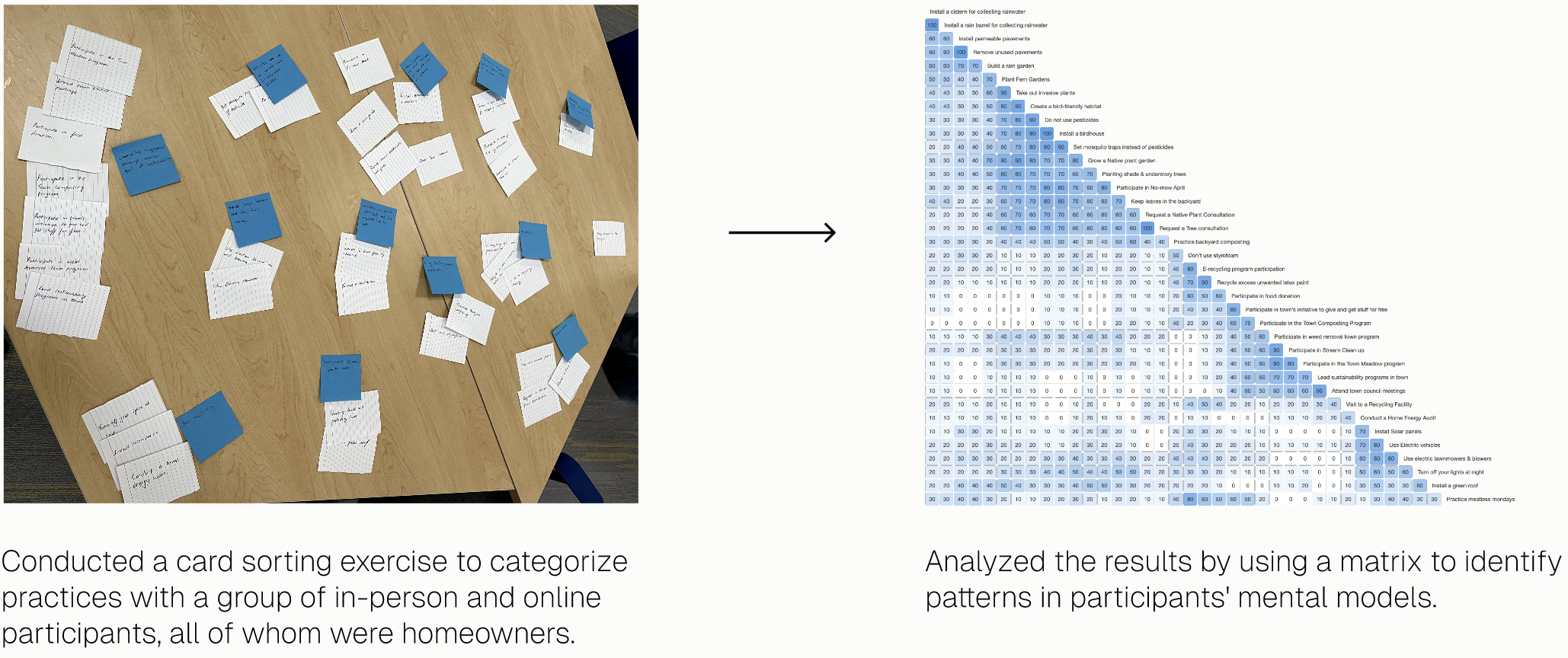
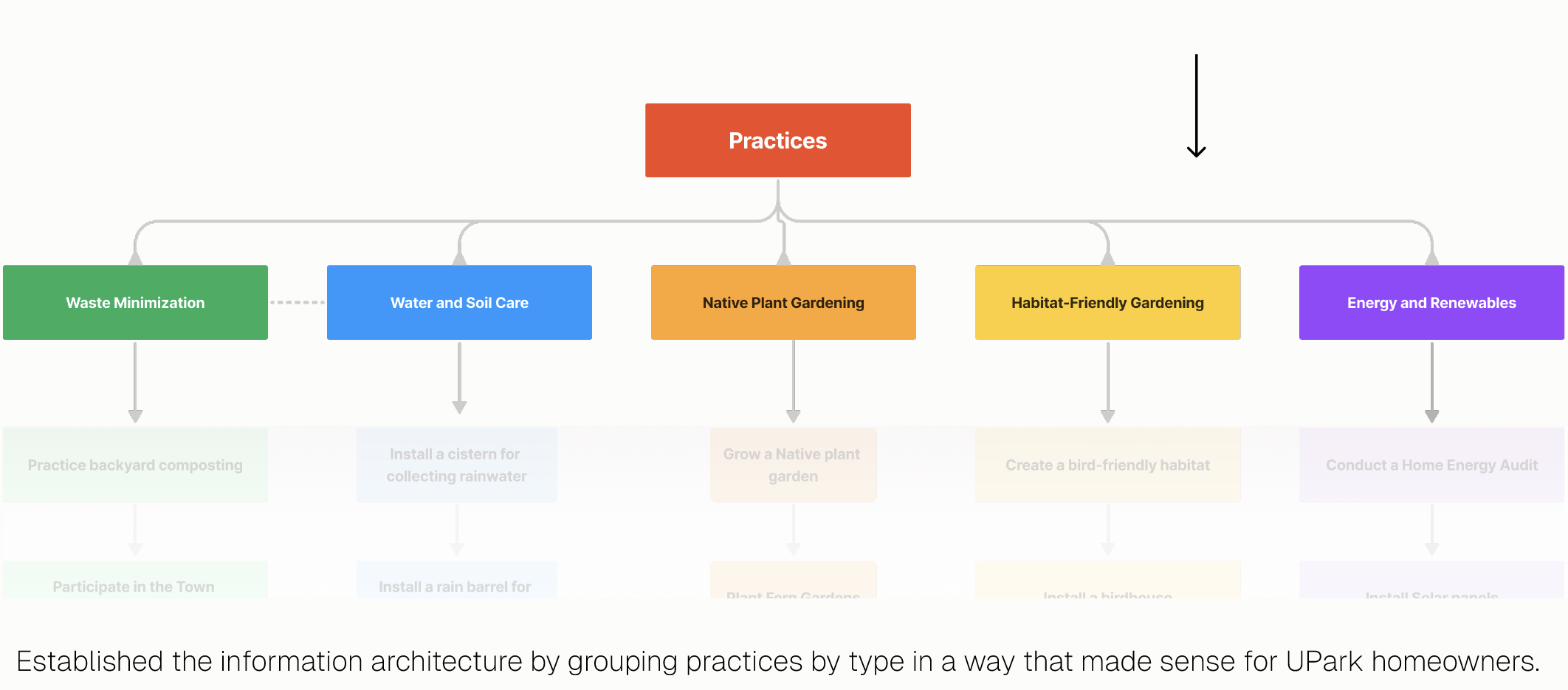
Information Architecture For Practices
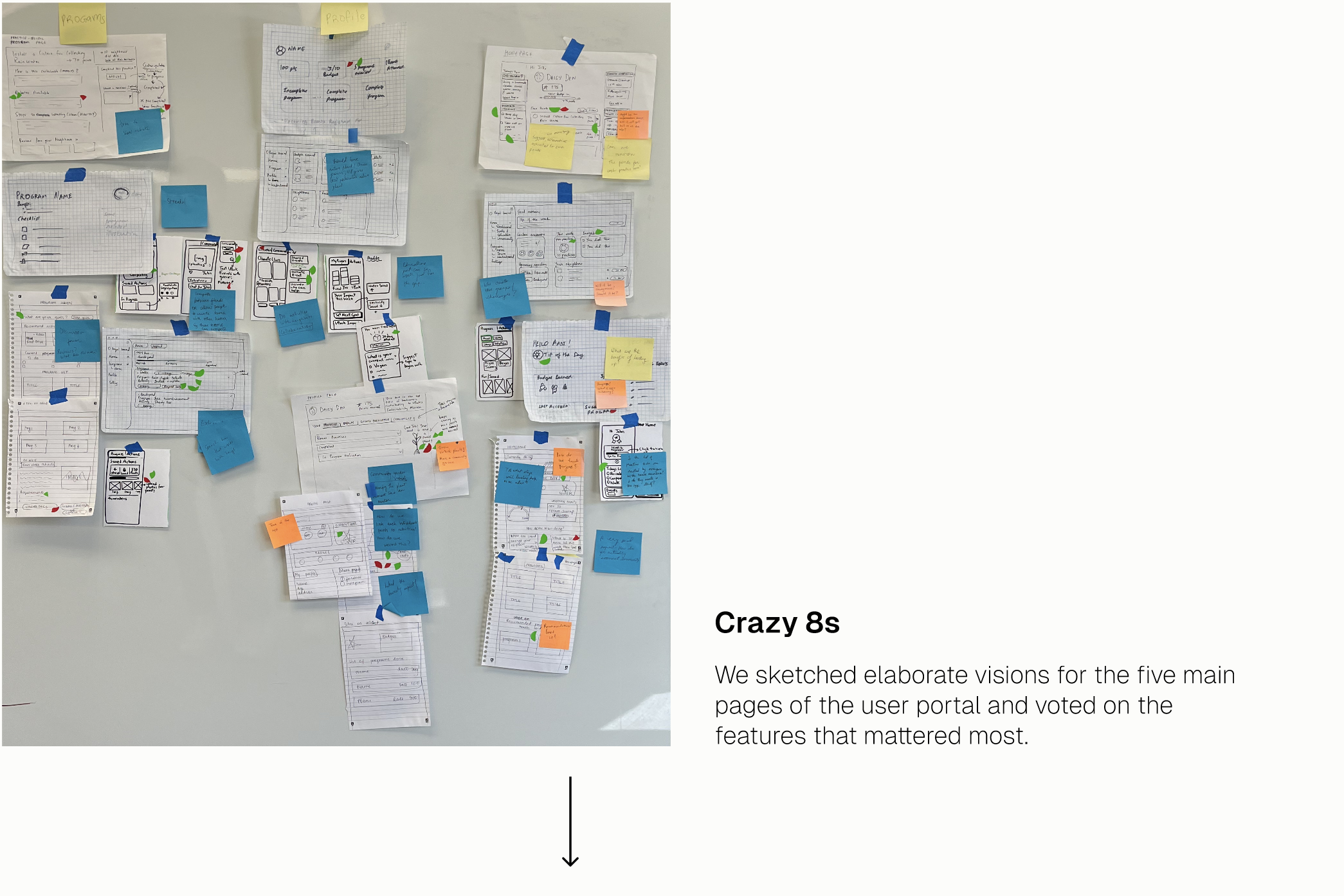
Once we understood whom we were designing for, we moved on to crafting a
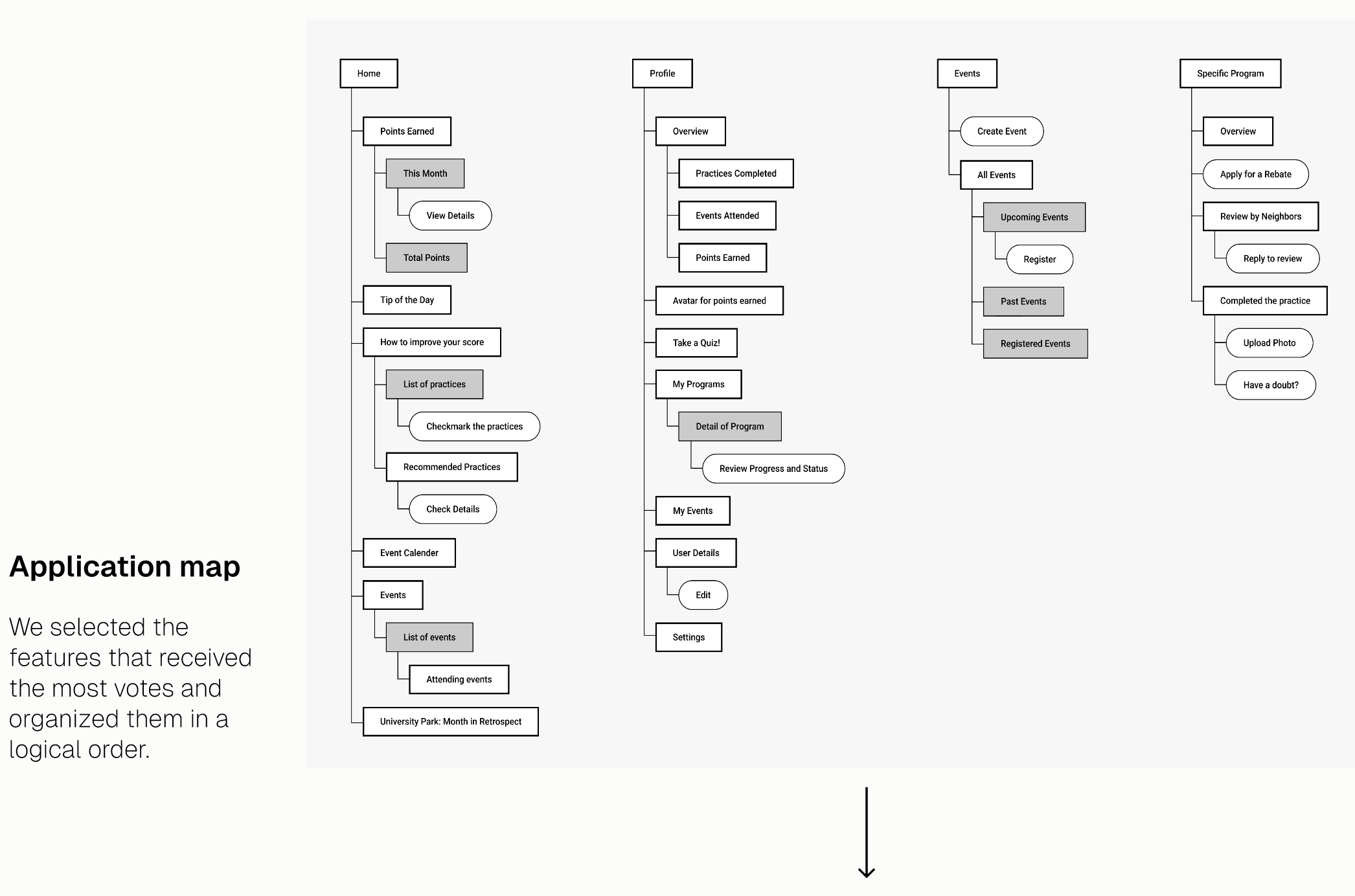
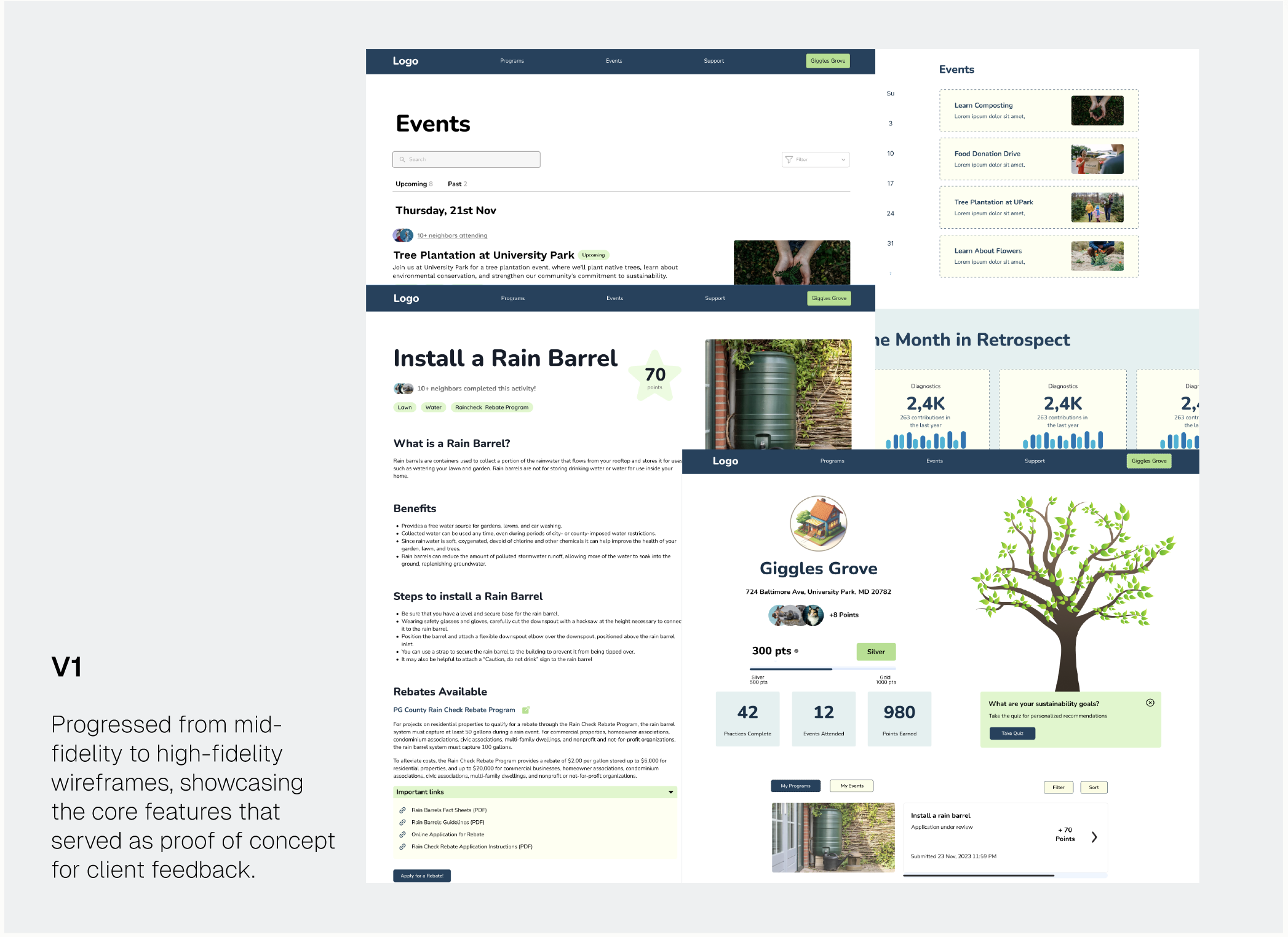
Proof Of Concept
Once the core features were established, we moved on to
Identifying the Motivators
How do we visualize progress and ensure users are motivated to complete more practices?
By introducing just the right amount of gamification!
We formulated multiple strategies and tested edge cases to ensure we get this right which resulted in:
How do we build an active community that shares information and brings people together?
We introduced a community page where people can publicly discuss all things sustainable and share their experiences with practices and events, encouraging community engagement.
Once the user facing part of the portal came together, we designed an
Agile Backend Framework
Monitor resident activity
By introducing proof of submission mechanisms that make the approval process easier for residents and the sustainability committee.
Maintain the platform
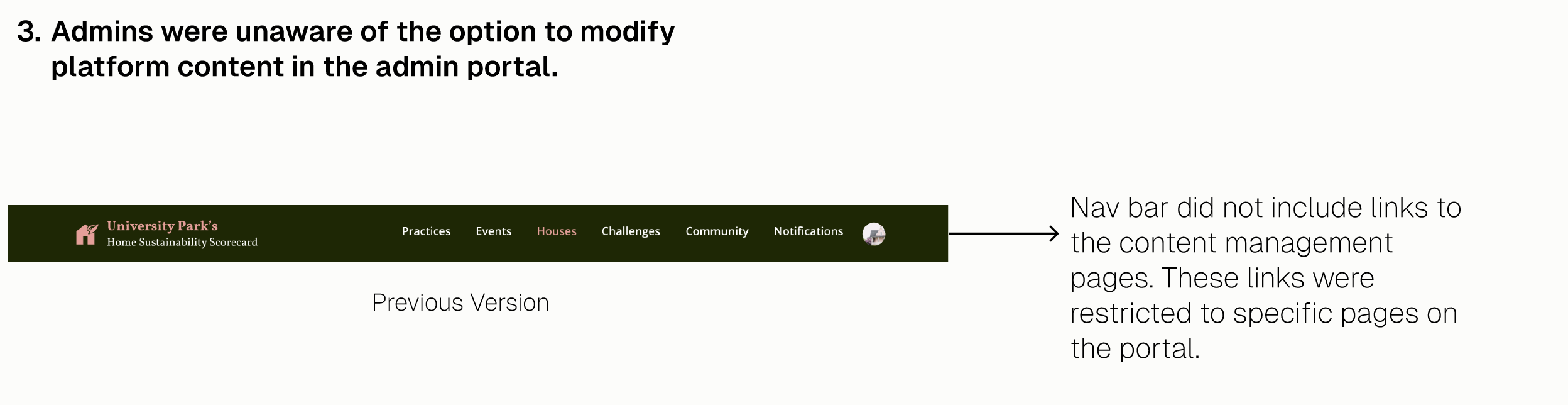
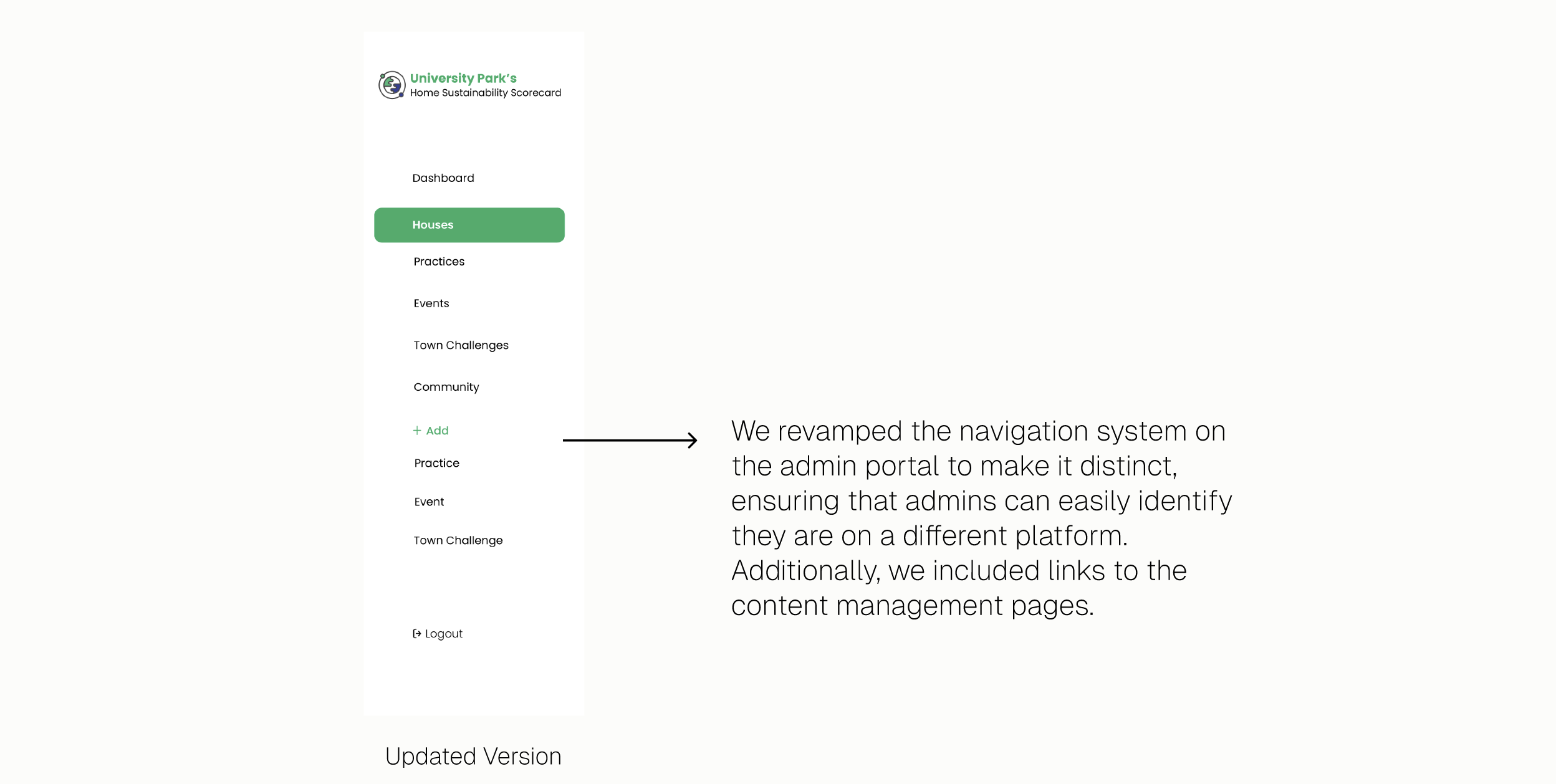
With a content management system, each page can be modified by the sustainability committee, allowing them to add new challenges, events, and practices.
Granular Data Exploration
Admins can delve into each dataset to gain a deeper understanding of resident activity, enabling them to direct their efforts more effectively.

Now, to the one of the most challenging yet rewarding parts of this process:

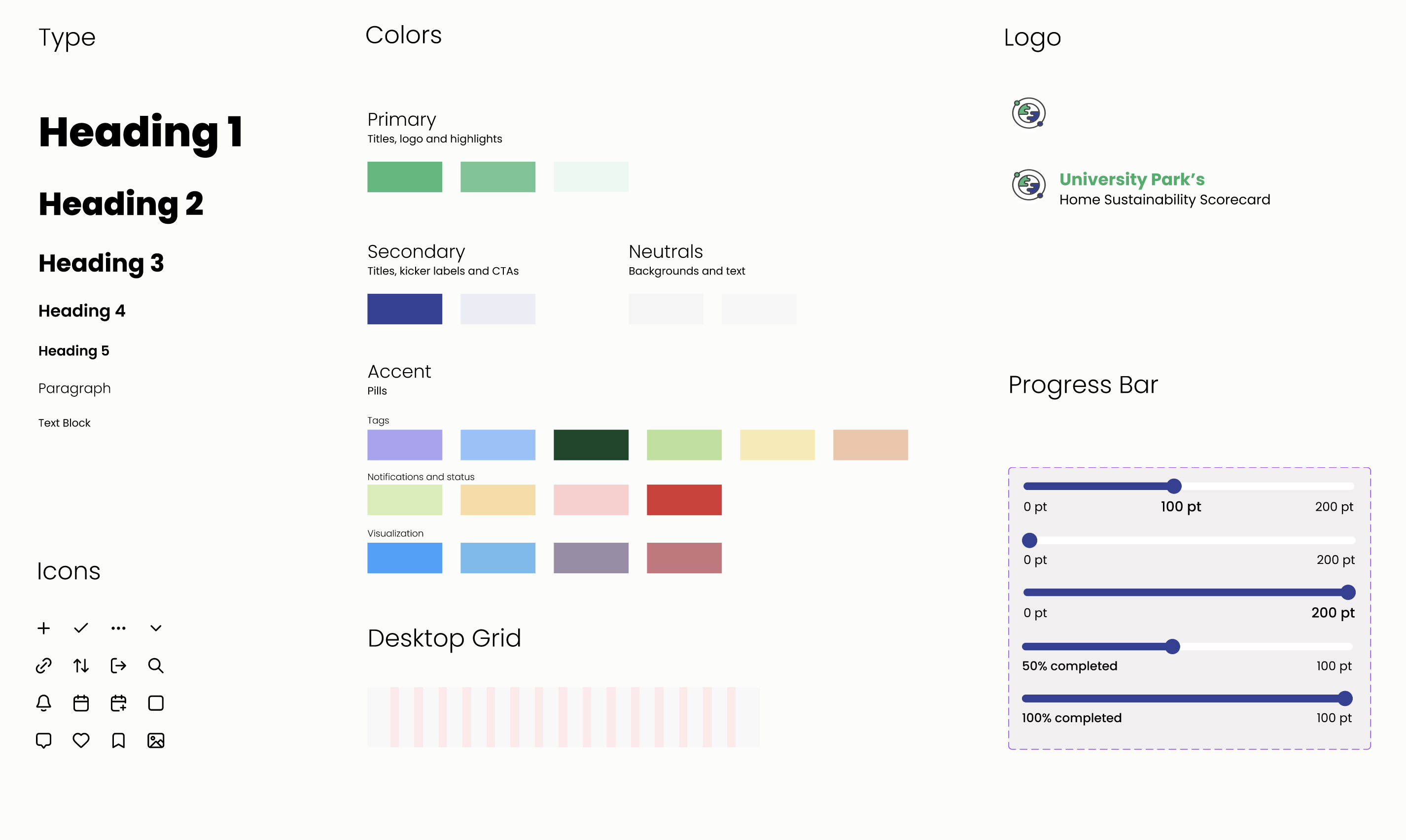
Establishing a Design System
When we started working on the design direction, we let our creativity run wild in the best way possible, resulting in five completely different ideas. Despite our strikingly different mood boards and concept boards, we came together to set a cohesive tone for the platform by designing multiple versions of the base pages and preference testing our designs with proxy users before finalizing the design system.
Once our screens for the core user flows were designed, we began
Testing our Design

We conducted remote semi-structured user interviews with University Park residents of varying demographics, guided by a task list focused on the five main user flows we identified.
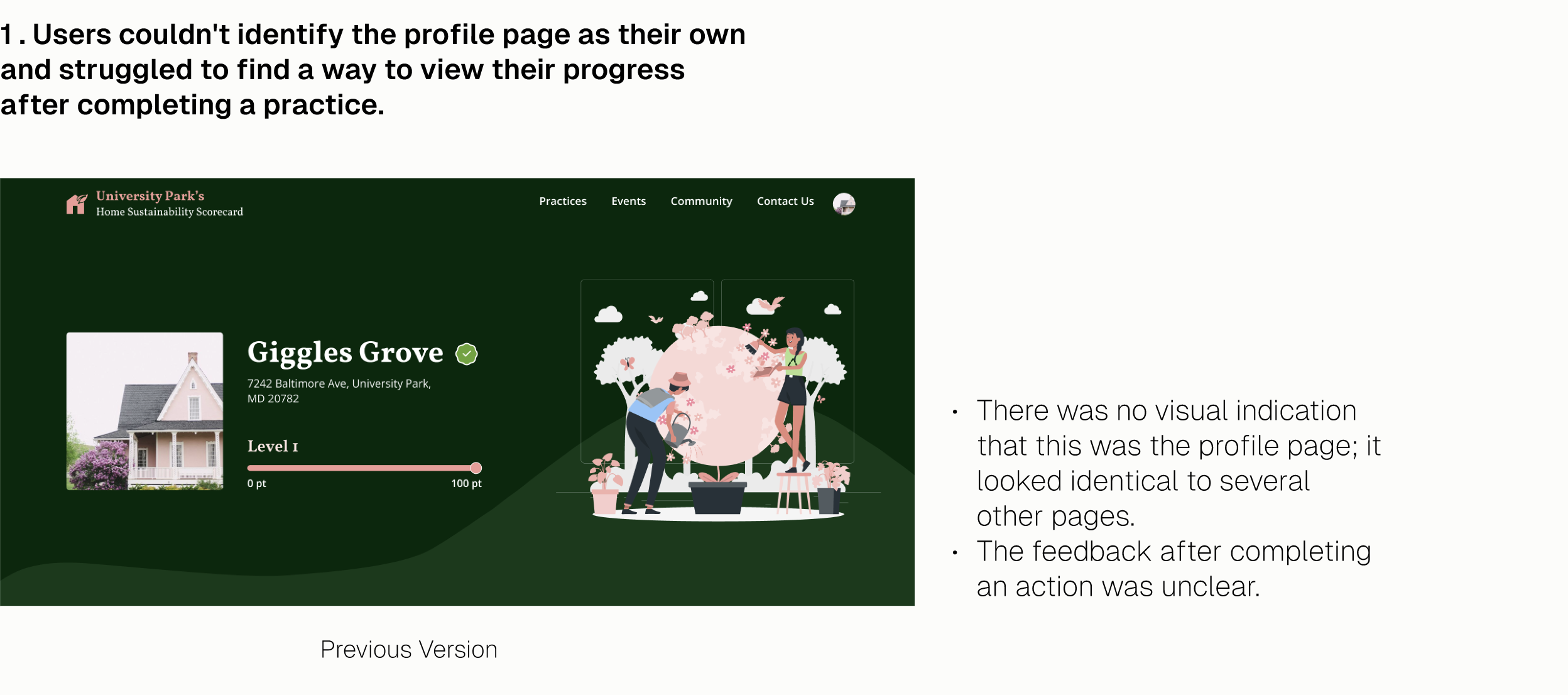
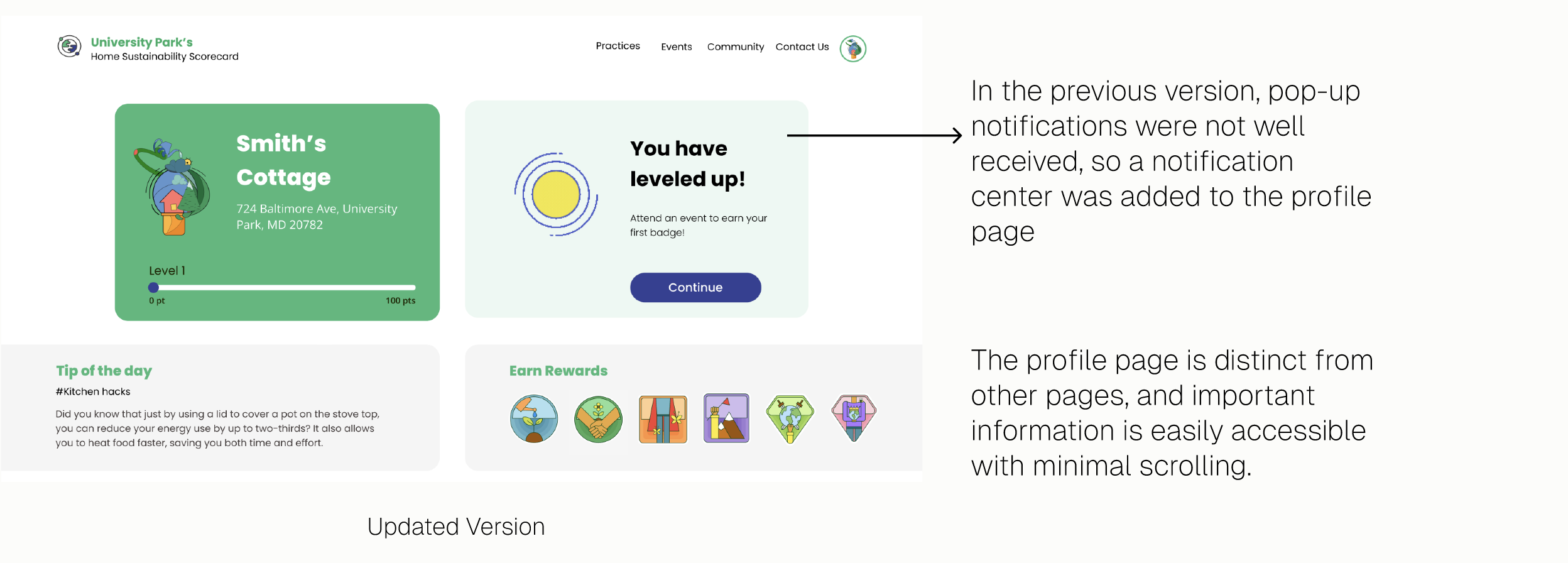
Here’s what we gathered:
After addressing user feedback and designing all user flows, the design files were thoroughly documented in Figma Dev mode for developer handoff.

This project taught me a lot and here are my

Key Takeaways

  • Design doesn’t happen in a vacuum. Learning how it intersects with other functions while bringing a product to life was an incredibly valuable experience.
  • Considering the technical feasibility of each page element was extremely helpful, enabling us to devise creative solutions to overcome technical roadblocks through design.
  • Refining our leading questions until they were highly specific allowed us to target the exact problems we aimed to solve, which helped us effectively explain to external stakeholders why this platform would work.
Credits
  • Aaditya, Fatema, Meghana and Pooja for being incredible teammates.
  • Joe Thompson and the entire University Park Sustainability Committee for this meaningful opportunity.
  • Dr. Lutters for his insightful guidance.